

Things to Watch for to Maintain Your Tires
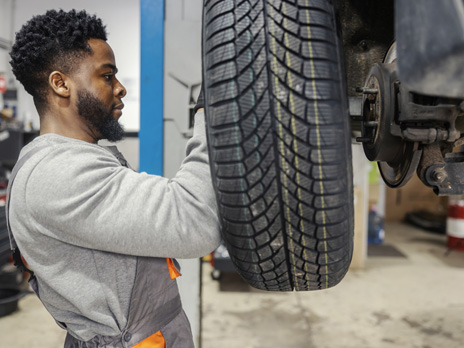
If you own a car, you know it's never fun to fork out money to fix things like replacing worn-out or broken parts, such as a belt or drive shaft. Maintenance costs are also part of the package.
While some maintenance tasks may not be urgent, there are four items on the car that you should replace when they are worn or damaged: your tires.
Tires are the only part of the car that touches the road, and it's important that they have enough tread on them to handle your local conditions, particularly rain, snow or sleet. Other issues that can compromise safety include uneven wear or damage to the tire sidewall.
1. Tread Wear
If you're tooling around on bald tires, it's time to replace them. But what about if you still have some tread left? At what point should you buy a new set of tires?
Experts recommend the "quarter test." [DM1] Here's how it works:
Insert a quarter into the tread groove with Lincoln's head facing down; if you can see his entire head, the tread is worn and needs replacing (considered legally bald at 2/32 inches). Most experts recommend replacing tires when tread depth reaches around 2/32-3/32 inches.
2. Uneven Wear
Even if the tread depth is slightly above 2/32 inches, uneven wear across the tire can indicate problems.
Uneven tire tread wear can be dangerous as it can significantly affect your vehicle's handling, stability and braking ability, potentially leading to loss of control, hydroplaning and increased risk of blowouts.
If you notice uneven wear, you should get your wheel alignment checked and address any underlying issues with suspension components, tire pressure or worn parts as needed by a mechanic.
Key dangers of uneven tire wear:
- Poor handling: Uneven tread can cause the car to pull to one side, making steering difficult and unpredictable.
- Reduced traction: Areas with less tread depth may not grip the road properly, leading to potential loss of control, especially in wet or icy conditions.
- ·Increased wear on other components: Uneven tire wear can put additional stress on suspension parts and other components, causing premature wear.
3. Signs of Damage
Tire damage like cuts and bulges on the sidewall can lead to sudden blowouts, causing loss of vehicle control.
Cuts: The most common type of sidewall damage, cuts can occur when your tires come into contact with sharp objects on the road, such as glass, wood or debris.
Even if the inner parts of the tire are not exposed by the cut, it is important to have a professional assess the damage, as cuts can lead to rapid tire pressure loss or a complete blowout. If the cut is only a few millimeters deep, the tire can still be driven on, but any damage that goes deeper into the sidewall is cause for replacement.
Bulges or bubbling: Sidewall bubbling can occur because of impact, a manufacturing issue or even just age. It's also possible to under-inflate your tires and cause sidewall bulging, as the weight of the car places more stress on a tire's internal structure.
A Final Word
Your tires are a crucial safety feature. If they have plenty of tread, they can greatly reduce the chances of having an accident if you have to brake suddenly, particularly in wet or icy conditions.
Ready for new tires or to save on other automotive parts? Members can save on most automotive parts with Discounts & Rewards. Visit AAA.com/Save to learn more.
This information is being provided for general informational purposes only. Meemic Insurance Company does not assume any liability in connection with providing this information.
[DM1]Not saying you need to replace this, but AAA recommends using a quarter instead (double the tread depth compared to a penny): https://www.aaa.com/autorepair/articles/when-to-replace-tires-check-your-tread
https://www.aaa.com/autorepair/articles/prepare-your-car-for-summer-travel